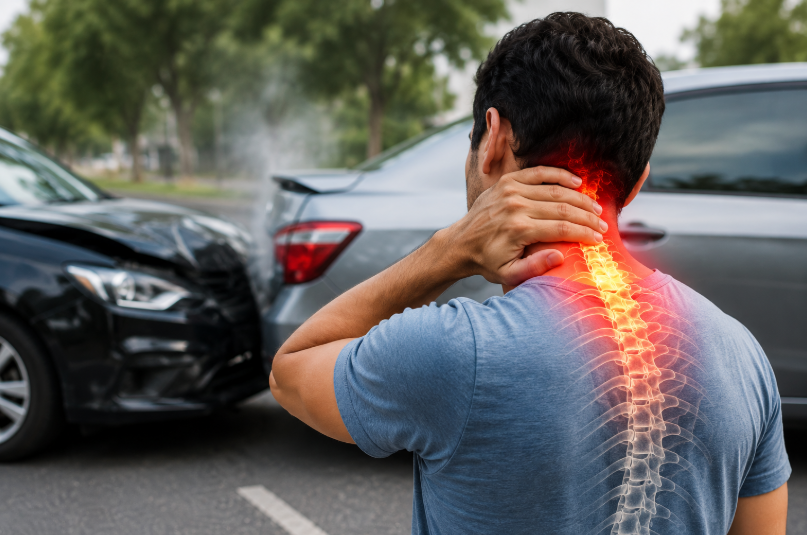
A car accident can happen in seconds, but the pain and stiffness that follow may last much longer. Even a relatively minor collision can place significant force on the neck, back, shoulders, and other joints.
Some people notice discomfort immediately, while others may develop symptoms hours or days after the accident. Understanding common symptoms—and knowing when to seek appropriate care—can help you make informed decisions about your recovery.
Common Types of Pain After a Car Accident
1. Neck Pain and Whiplash
Whiplash commonly occurs when the head is rapidly moved backward and forward during a collision. This sudden movement can strain muscles, ligaments, and other structures of the neck.
Possible symptoms include:
- Neck pain and stiffness
- Reduced range of motion
- Pain when turning the head
- Shoulder or upper-back discomfort
- Headaches
2. Lower Back Pain
The impact of a collision can place stress on the muscles, joints, discs, and supporting tissues of the lower back.
You may experience:
- Aching or stiffness
- Muscle tightness or spasms
- Difficulty bending or twisting
- Pain while sitting or standing
- Pain that travels into the buttock or leg
3. Upper and Mid-Back Pain
Seat belts, sudden acceleration or deceleration, and changes in body position during a crash can contribute to soreness and stiffness through the upper and middle back.
4. Shoulder Pain
Shoulder discomfort may result from the impact itself, bracing during the collision, or pressure from the seat belt.
Symptoms can include pain, tenderness, stiffness, or difficulty moving the arm normally.
5. Headaches
Headaches after an accident may be associated with neck tension or injury, but headaches can also occur with a concussion or other head injury.
A new or severe headache after a collision should not automatically be assumed to be coming from the neck. Medical evaluation may be necessary.
6. Numbness, Tingling, or Radiating Pain
Irritation or compression of a nerve may cause symptoms such as:
- Tingling
- Numbness
- Burning sensations
- Shooting pain
- Pain traveling into an arm or leg
These symptoms deserve proper evaluation to determine their cause.
How Can a Chiropractor Help After a Car Accident?
A chiropractor can evaluate the musculoskeletal system to determine whether injuries involving the joints, muscles, and surrounding tissues may be contributing to your symptoms.
Depending on the examination findings and whether chiropractic treatment is appropriate for you, care may include:
- Chiropractic adjustments or joint mobilization
- Gentle soft-tissue techniques
- Stretching and mobility exercises
- Rehabilitation and strengthening exercises
- Posture and movement recommendations
- Home-care guidance
The goal is to help improve mobility and function, reduce musculoskeletal pain, and support recovery.
Treatment should be individualized. Not every person involved in a car accident needs the same type of care, and some injuries require medical imaging, medication, specialist evaluation, or emergency treatment instead of—or in addition to—chiropractic care.
Don’t Ignore Warning Signs
Some symptoms after a car accident can indicate a more serious injury. Seek prompt or emergency medical attention for symptoms such as:
- Loss of consciousness
- Confusion or significant changes in alertness
- Severe or rapidly worsening headache
- Repeated vomiting
- New weakness or significant numbness
- Difficulty walking or maintaining balance
- Loss of bladder or bowel control
- Severe chest or abdominal pain
- Difficulty breathing
Early Evaluation Can Make a Difference
You don’t have to wait for pain to become severe before getting evaluated. If you develop pain, stiffness, headaches, numbness, or difficulty moving normally after a collision, consider speaking with an appropriate healthcare professional.
A chiropractor can be part of the healthcare team for certain musculoskeletal injuries following a motor vehicle accident and can determine whether chiropractic treatment is appropriate or whether a referral for additional medical evaluation is needed.
Were You Recently Involved in a Car Accident?
If you’re experiencing neck pain, back pain, stiffness, headaches, or other musculoskeletal symptoms after a collision, consider scheduling an evaluation with a qualified healthcare professional.
Your recovery starts with understanding what’s causing your symptoms and choosing the appropriate care for your condition.
This article is for general educational purposes only and is not a substitute for individual medical advice, diagnosis, or emergency care.