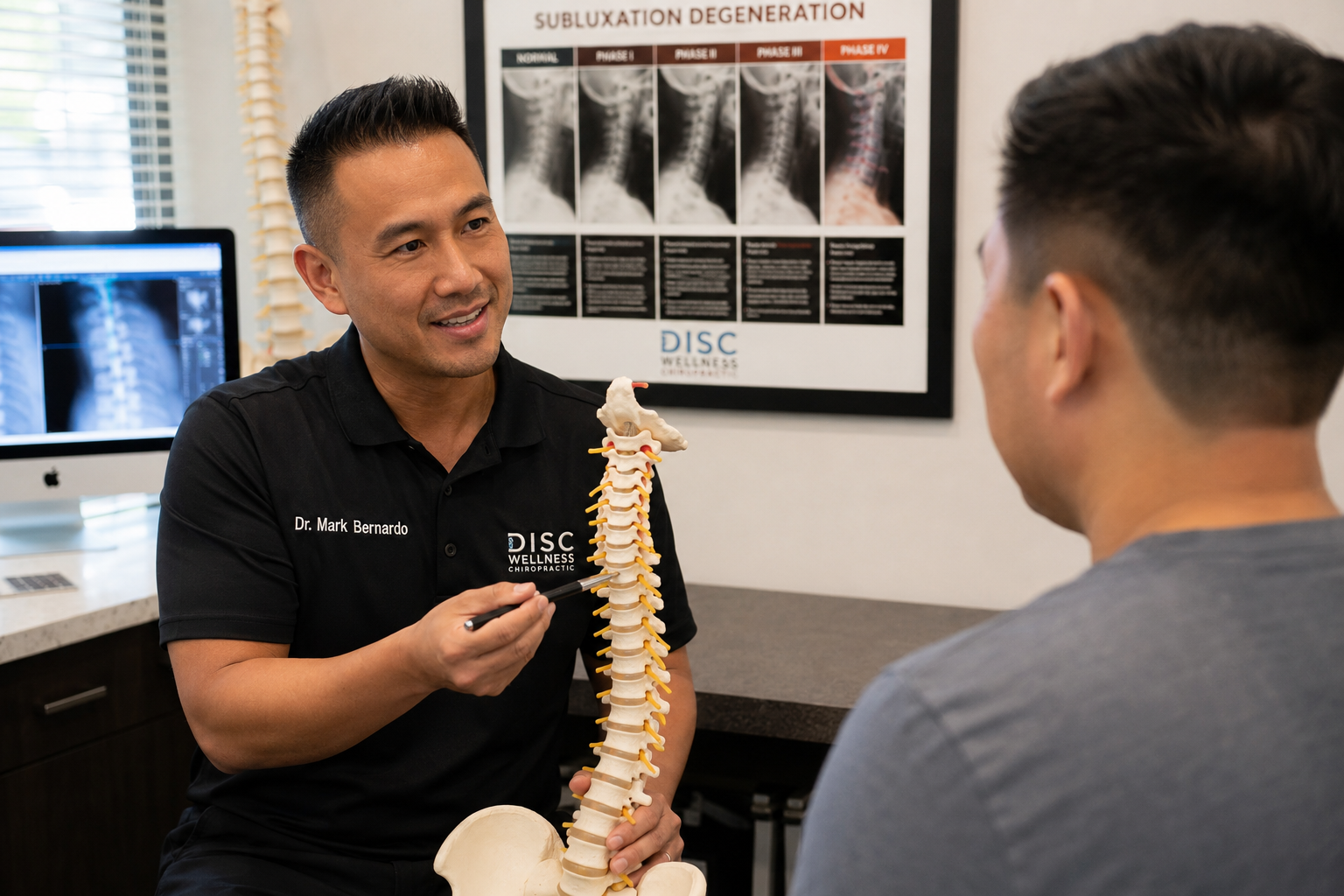
The Short Answer: Yes, a Chiropractor May Help With a Pinched Nerve
If you are dealing with numbness, tingling, burning, weakness, pain going down your arm, or pain shooting down your leg, a pinched nerve may be the cause.
The good news is that many people with pinched nerve symptoms may benefit from chiropractic care, especially when the problem is related to spinal movement issues, disc injuries, inflammation, or mechanical stress on the nervous system.
At Disc Wellness Chiropractic, we have helped thousands of patients dealing with sciatica, disc bulges, disc herniations, neck pain, arm pain, numbness, tingling, and nerve-related symptoms. While every case is different, many patients come to us after trying physical therapy, massage, injections, medications, stretching programs, or simply waiting for the problem to improve on its own.
Our goal is simple: identify the cause, create a customized treatment plan, and help patients return to living, working, and playing without pain whenever possible.
What Is a Pinched Nerve?
A pinched nerve occurs when a nerve becomes irritated or compressed, often due to a disc injury, inflammation, degeneration, injury, or abnormal movement within the spine.
Many people think a nerve is literally being pinched like stepping on a garden hose. In reality, the situation is often more complex.
The nerves leaving your spine travel through small openings between the vertebrae. When a disc bulges, a disc herniates, inflammation develops, or the spine begins moving improperly, those nerves may become irritated and start producing symptoms.
These symptoms can occur far away from the actual source of the problem.
For example:
- A problem in your neck may cause pain into your shoulder, arm, or hand.
- A problem in your lower back may cause pain into your buttocks, leg, calf, or foot.
- A nerve issue may cause numbness, tingling, burning, weakness, or shooting pain.
This is why proper evaluation is so important.
Can a Chiropractor Help With a Pinched Nerve?
In many cases, yes.
One of the biggest mistakes people make is assuming medication is the only answer or believing surgery is their only option.
While there are situations where surgery is necessary, many patients first deserve a proper evaluation to determine what is actually causing their symptoms.
At Disc Wellness Chiropractic, we commonly see patients experiencing:
- Sciatica
- Pain down the leg
- Arm numbness
- Hand tingling
- Neck pain
- Low back pain
- Burning sensations
- Weakness
- Chronic recurring pain
Many of these patients improve through a combination of specific chiropractic adjustments, spinal decompression, rehabilitation, home care, and patient education.
What Causes Most Pinched Nerves?
The most common causes we see include:
Disc Bulges
A disc bulge occurs when the disc begins pushing outward beyond its normal boundaries.
Many patients are surprised to learn they may have had a disc bulge developing for years before symptoms finally appear.
Disc Herniations
A herniated disc occurs when disc material pushes further outward and may create additional irritation around nearby nerves.
Disc herniations are one of the most common findings we see in patients dealing with sciatica and severe nerve symptoms.
Wear and Tear
Over time, joints, discs, ligaments, and surrounding tissues experience stress.
Years of repetitive movement, poor posture, sitting, lifting, and everyday life can gradually contribute to nerve irritation.
Injuries
Car accidents, sports injuries, falls, lifting injuries, and workplace accidents can all contribute to nerve-related symptoms.
Repetitive Stress
Many patients spend hours sitting at desks, driving, looking down at phones, or performing repetitive tasks that place stress on the spine.
Common Signs and Symptoms of a Pinched Nerve
Every patient experiences symptoms differently.
Some common symptoms include:
- Pain going down the leg
- Sciatica
- Pain going down the arm
- Numbness
- Tingling
- Burning sensations
- Weakness
- Muscle tightness
- Difficulty walking
- Difficulty standing
- Difficulty sitting
- Reduced range of motion
Many patients tell us:
“It comes and goes.”
This is actually something we pay close attention to.
Why Symptoms That Come and Go Can Be Dangerous
One of the biggest mistakes people make is assuming a problem is improving simply because symptoms temporarily disappear.
In our experience, many patients notice a pattern:
The pain appears.
The pain improves.
The pain disappears.
Then it returns.
And when it returns, it is often worse.
Many disc-related problems follow this pattern.
Waiting too long can allow the condition to become more severe and more difficult to manage.
What We Commonly See in Patients With Pinched Nerves
After evaluating thousands of patients, several patterns consistently appear.
Many patients report:
- Pain traveling down one leg
- Numbness in the hands
- Tingling in the fingers
- Pain in the buttocks
- Difficulty sleeping
- Difficulty exercising
- Fear of surgery
- Inability to perform daily activities
The most common MRI findings we see include:
- Disc bulges
- Disc herniations
- Degenerative changes
The most common examination findings include:
- Reduced range of motion
- Pain with movement
- Difficulty walking
- Difficulty getting out of bed
- Muscle guarding
- Nerve irritation signs
How We Evaluate Pinched Nerves at Disc Wellness Chiropractic
We believe proper diagnosis comes before treatment.
Every patient receives a detailed evaluation designed to identify the likely cause of their symptoms.
This evaluation may include:
- Consultation
- Health history review
- Posture analysis
- Range of motion testing
- Orthopedic testing
- Neurological testing
- Thermal scanning
- Gonstead analysis
- Movement assessment
- Imaging review when available
This comprehensive approach helps us determine whether chiropractic care may be appropriate and whether additional imaging may be necessary.
Why We Use the Gonstead System
Not all chiropractic techniques are the same.
At Disc Wellness Chiropractic, we primarily utilize the Gonstead system because of its focus on specificity.
Our philosophy is simple:
You can adjust many areas of the spine.
But if you miss the area actually contributing to the problem, you may not be addressing the true source.
The Gonstead system helps us identify areas of concern through:
- Detailed analysis
- Motion assessment
- Instrumentation
- Imaging review
- Clinical findings
This allows us to be as specific as possible.
Why Specificity Matters
If someone is one bone away from the actual problem area, they may not be addressing the true source of the issue.
Specificity helps us focus care where it is needed most.
That is one reason many patients seek us out after trying other approaches.
Why We Use Thermal Scanning
Thermal scanning is used to help identify changes that may indicate irritation within the nervous system.
We perform thermal scans regularly because findings can change over time.
By continuously evaluating the patient, we can make more informed decisions regarding care.
Understanding the Disc Wellness Protocol
One thing that makes Disc Wellness Chiropractic different is our Disc Wellness Protocol.
We developed this system because we felt many patients were missing a complete solution.
Some offices focus only on adjustments.
Others focus only on decompression.
We believe both can play important roles when clinically appropriate.
The Disc Wellness Protocol combines:
- Specific Gonstead chiropractic adjustments
- Spinal decompression
- Movement rehabilitation
- Home exercises
- Massage therapy
- Shockwave therapy when appropriate
- Patient education
- Long-term prevention strategies
The goal is to help improve movement, reduce stress on the affected area, and support long-term recovery.
The Four Phases of the Disc Wellness Protocol
Phase 1: Pain Relief
The initial focus is reducing irritation and helping patients become more comfortable.
Phase 2: Rehabilitation
Once symptoms begin improving, we focus on restoring proper movement patterns.
Phase 3: Strength Building
This phase emphasizes strengthening and stability.
Phase 4: Maintenance
Long-term maintenance helps many patients continue protecting their progress.
When Do We Recommend Spinal Decompression?
Spinal decompression is commonly recommended for patients experiencing:
- Sciatica
- Disc bulges
- Disc herniations
- MRI-confirmed disc problems
- Radiating symptoms
The goal is to reduce mechanical stress on injured spinal structures.
When Do We Recommend MRI Imaging?
Not every patient needs an MRI.
However, MRI imaging may be appropriate when:
- Symptoms are severe
- Symptoms are worsening
- Radiating pain is present
- Progress is limited
- Additional information is needed
We have partnerships with local imaging facilities that allow many patients to obtain advanced MRI imaging at affordable cash-pay rates when clinically appropriate.
Real Patient Story #1
One memorable case involved a man in his 50s who loved working out.
He woke up with severe pain traveling down his leg.
He had already tried:
- Injections
- Stretching
- Conservative care approaches
Unfortunately, nothing seemed to help.
Following evaluation, we developed a customized treatment plan.
Within approximately one month, he reported roughly 50% improvement.
As care continued, he continued making progress and was able to return to many of the activities he enjoyed.
Real Patient Story #2
Another patient experienced severe arm pain and numbness that had been present for years.
Neck-related nerve problems can sometimes be more challenging because the condition has often been present for a long time before treatment begins.
After approximately two months of care, the patient reported meaningful improvement in symptoms and daily function.
Real Patient Story #3
We also commonly see patients who have been told surgery may be necessary.
One particular patient arrived frightened and worried about an upcoming surgical procedure.
After careful evaluation and conservative care, the patient began noticing significant improvements.
While surgery remains appropriate for certain situations, many patients appreciate exploring conservative options first when medically appropriate.
Common Myths About Pinched Nerves
Myth #1: Surgery Is Always Necessary
Many patients improve without surgery.
Myth #2: Injections Fix Everything
Injections may help some patients, but they do not always address the underlying cause.
Myth #3: Disc Bulges Never Improve
Many people assume disc injuries automatically mean lifelong problems.
That is not always the case.
Myth #4: Chiropractic Adjustments Are High Force
Many patients are surprised by how gentle specific chiropractic care can be.
Myth #5: MRI Findings Automatically Mean Surgery
MRI findings must always be interpreted alongside symptoms and clinical findings.
When Surgery May Be Necessary
There are situations where surgery may be appropriate.
Examples can include:
- Significant neurological loss
- Progressive weakness
- Severe structural damage
- Failure of conservative care
- Certain emergency situations
Our goal is always to help patients determine the most appropriate path based on their individual situation.
Red Flags That Require Immediate Medical Attention
Seek immediate medical evaluation if you experience:
- Loss of bowel control
- Loss of bladder control
- Severe progressive weakness
- Major trauma
- Sudden significant neurological changes
Why Patients Choose Disc Wellness Chiropractic
Patients often choose our office because of:
- The Disc Wellness Protocol
- Gonstead-specific care
- Detailed evaluations
- Thermal scanning
- Spinal decompression
- Premium patient experience
- Private treatment rooms
- Gentle approach
- Affordable MRI partnerships
- Over 475 Google reviews
We are proud to be one of the highest-reviewed chiropractic clinics in Placer County.
Serving Rocklin, Roseville, Lincoln, Granite Bay, Loomis, and Citrus Heights
Patients travel from throughout the region seeking help for:
- Sciatica
- Pinched nerves
- Disc bulges
- Disc herniations
- Neck pain
- Arm pain
- Numbness
- Tingling
Many people in these communities spend long hours sitting, commuting, working desk jobs, participating in sports, golfing, playing pickleball, or performing physically demanding work.
These activities can contribute to the development of spinal problems over time.
Final Thoughts
If you are experiencing numbness, tingling, pain going down your arm, pain going down your leg, or symptoms that keep returning, do not ignore them.
The sooner you understand what is causing the problem, the more options you typically have available.
At Disc Wellness Chiropractic, our mission is to help patients identify the cause of their symptoms, improve function, and return to living, working, and playing pain free whenever possible.
If you believe you may be dealing with a pinched nerve, a detailed evaluation is often the best first step toward understanding your options and developing a plan that fits your specific situation.